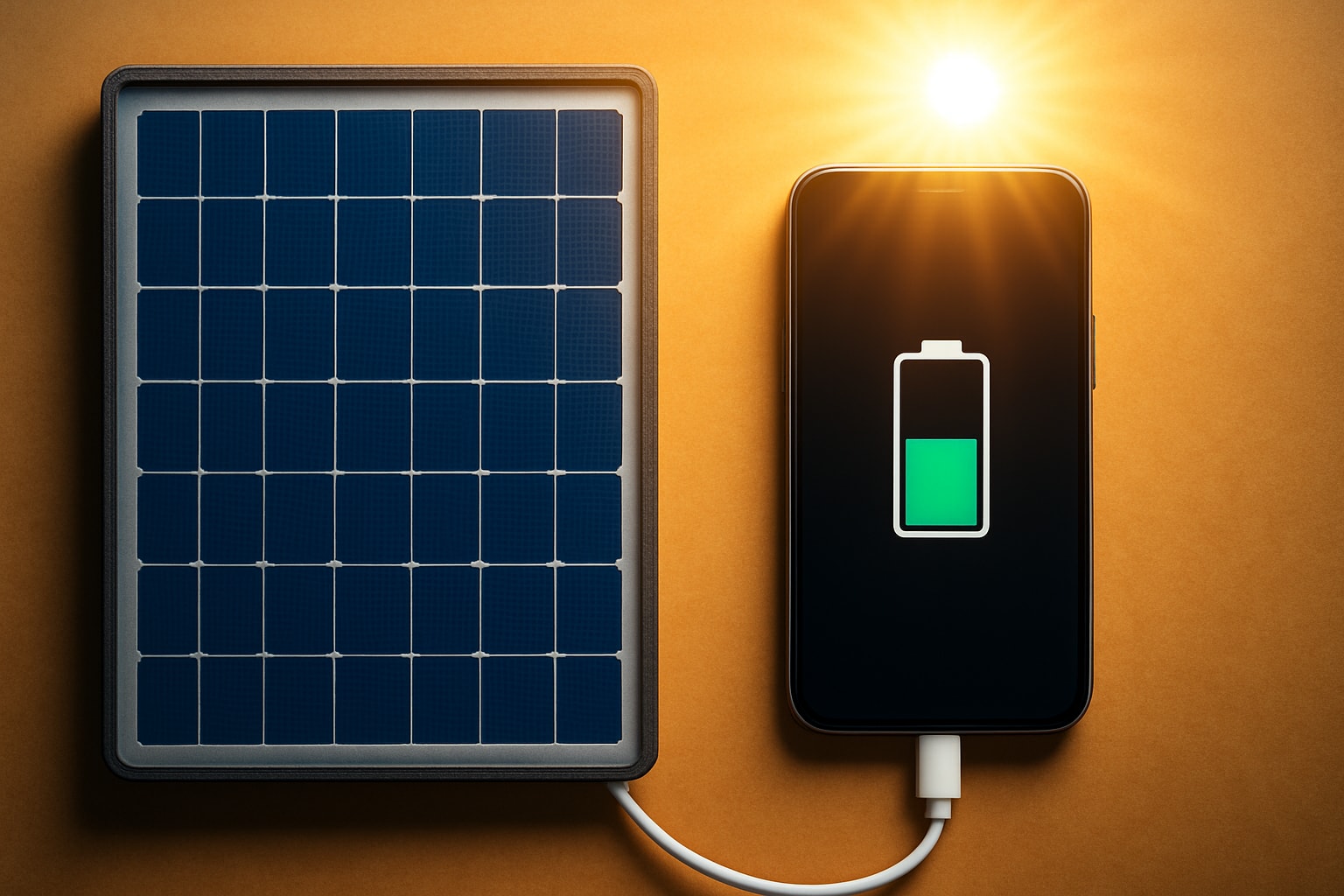
In 2025, the demand for a reliable and eco-friendly solar phone charger is higher than ever as people seek smarter ways to stay powered up on the go. Running out of battery during travel, outdoor adventures, or emergencies is a common frustration, often leaving us disconnected when it matters most.
This article will guide you through the top 7 solar phone chargers available in 2025, comparing their features, value, and ideal use cases. You will discover product comparisons, learn about key features, find out which models suit your lifestyle, and gain expert buying advice to help you choose confidently.
Why Choose a Solar Phone Charger in 2025?
Choosing a solar phone charger in 2025 is more relevant than ever. As mobile devices become essential for work, travel, and safety, the need for reliable, eco-friendly charging solutions continues to rise. People want to power up anywhere, anytime, with minimal impact on the planet. Let’s explore the reasons driving this shift, how solar options compare with traditional chargers, who benefits the most, and what innovations are shaping the market.
The Shift Towards Sustainable Tech
The global focus on sustainable technology has never been stronger. Consumers are actively seeking products that lower their environmental footprint. A solar phone charger aligns perfectly with these values by harnessing clean energy from the sun, reducing reliance on disposable batteries and grid electricity.
Recent data shows a steady increase in the adoption of solar-powered devices, as highlighted in the Solar Charger Market Size and Growth report. This growth reflects a collective move toward greener electronics, with more people choosing solar phone charger options for both everyday use and emergencies.
Solar Chargers vs. Traditional Power Banks
When comparing a solar phone charger to a conventional power bank, several key differences stand out. Solar models offer the unique advantage of recharging using sunlight, which can be a game changer during travel or outdoor activities. They are generally more versatile, as they can top up without access to wall power.
However, a solar phone charger may charge devices more slowly, especially in cloudy weather or limited sunlight. Traditional power banks tend to be faster and more consistent in controlled environments but lack renewable energy capabilities. Studies from competitor reviews indicate that, while solar options excel outdoors, they are best used as a backup rather than a primary source for high-drain devices.
Use Cases: Who Needs a Solar Phone Charger?
A solar phone charger is invaluable for a range of users. Travellers and backpackers appreciate the ability to recharge in remote locations. Campers and hikers can keep their devices powered for navigation and safety. Emergency preppers rely on a solar phone charger during power outages or natural disasters.
Outdoor professionals, such as surveyors or wildlife researchers, benefit from the reliability of solar charging in the field. Real-world scenarios, like multi-day trekking or long road trips, highlight how a solar phone charger outperforms regular power banks when access to electricity is limited.
Market Innovations in 2025
The year 2025 brings exciting advancements for the solar phone charger market. Newer models feature faster, more efficient solar panels, increasing charging speed even in less-than-ideal conditions. Battery capacities have grown, allowing for multiple device charges on a single cycle.
Safety improvements, such as integrated overcharge protection and rugged, waterproof designs, are now standard. Leading brands are pushing innovation, making the solar phone charger an even more attractive choice for tech-savvy consumers and outdoor enthusiasts.
How to Choose the Best Solar Phone Charger
Selecting the right solar phone charger in 2025 comes down to balancing your power needs, lifestyle, and budget. With so many models available, focusing on a few core criteria will help you make an informed choice and get the most value for your investment.
Key Features to Consider
When evaluating a solar phone charger, start by looking at power output, battery capacity, charging speed, number of ports, and panel efficiency. Power output, measured in watts (W), determines how quickly your device charges. Battery capacity, listed in milliamp-hours (mAh), affects how many full charges you can get for your phone or tablet.
Charging speed, especially with fast-charging protocols like QC 3.0 or USB-C PD, is crucial for those needing quick top-ups. Multiple ports allow you to charge more than one device at once, which is ideal for families or tech-heavy users. Panel efficiency, now reaching impressive levels according to recent Solar Charger Market Key Findings, directly influences how much sunlight is converted into usable energy.
Matching these features to your needs ensures your solar phone charger keeps you powered up, whether you are at home or in the wild.
Durability and Weather Resistance
A solar phone charger designed for outdoor use must withstand the elements. Look for models with waterproof, dustproof, and shock-resistant casings. Many top chargers now carry IP ratings, such as IP44 or IP67, indicating protection against water splashes and dust.
Rugged designs are particularly important for hikers, campers, and emergency kits. Real-world durability tests show that chargers with reinforced corners and sealed ports last longer in tough conditions. Choosing a charger with a robust build will give you peace of mind, knowing your device is ready for anything nature throws your way.
Portability and Design
Portability is key if you plan to take your solar phone charger on the go. Foldable panel designs are popular because they pack down small for easy transport, yet open up to maximise sunlight exposure. Fixed panel chargers tend to be simpler but can be bulkier.
Weight and size also matter, especially for travellers and outdoor adventurers. A lighter charger fits easily into a backpack, while an integrated handle or carabiner adds convenience. Consider how often you will carry your charger and choose a design that matches your mobility needs without compromising on performance.
Price vs. Performance
Solar phone charger prices range widely, from budget-friendly to premium models. Higher-priced options often include advanced features like fast charging, multiple built-in cables, or larger capacities. However, you should weigh these extras against your actual requirements.
A basic charger may be perfect for occasional use, while frequent travellers or families might benefit from investing in a more robust model. Always balance your budget with essential features, ensuring you are not paying for unnecessary add-ons. Prioritise quality and reliability to get the best value for your money.
Top 7 Solar Phone Charger Picks for 2025
Selecting the best solar phone charger in 2025 involves more than just picking the highest capacity. With advancements in solar panel efficiency and battery technology, there is now a charger for every type of user, from weekend campers to tech-heavy families. In this section, we break down the top seven options on the market, comparing their strengths, weaknesses, and ideal use cases. For a broader look at industry trends and innovation, see the latest Portable Solar Charger Market Trends report.
Below is a quick comparison of the top picks:
| Product | Capacity | Key Features | Price | Best For |
|---|---|---|---|---|
| BLAVOR Solar Charger Power Bank | 10,000mAh | Wireless, 20W Fast, Dual Flashlight | $26.99 | Daily, Emergencies |
| GOODaaa Power Bank Wireless Charger | 36,800mAh | 5 Panels, Wireless, Built-in Cables | $49.99 | Camping, Groups |
| FlexSolar 40W Foldable Solar Panel | N/A (No battery) | 40W, Foldable, USB-C/A | $44.08 | Fast Charging, Pros |
| Power-Bank-Solar-Charger 42,800mAh | 42,800mAh | QC 3.0, Flashlight | $25.49 | Emergencies, Long Trips |
| BigBlue 28W Solar Charger | N/A (No battery) | 28W, 3 USB, Foldable | $72.99 | Families, Groups |
| Uukto Power-Bank-Solar-Charger | 45,800mAh | Fast, 3 Cables, LED | $29.99 | Power Users, Travellers |
| Solar Charger Power Bank 42,800mAh | 42,800mAh | QC 3.0, Flashlight | $25.99 | Explorers, Remote Work |
BLAVOR Solar Charger Power Bank 10,000mAh, Portable Wireless Charger, 20W Fast Charging
The BLAVOR Solar Charger Power Bank is a compact and versatile solar phone charger designed for everyday use and emergencies. Priced at around $26.99, it offers a 10,000mAh capacity, making it suitable for topping up your smartphone once or twice on the go.
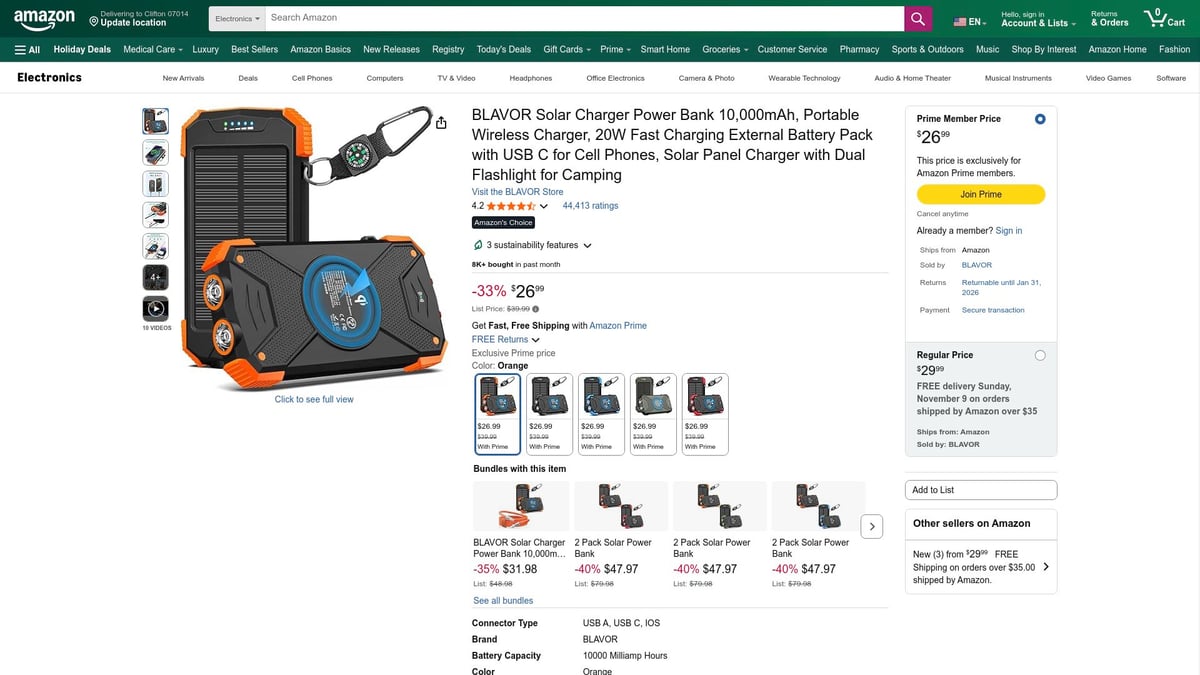
Key features include wireless charging, 20W fast charging, dual flashlights, and USB-C compatibility. The wireless function makes it convenient for users who want to avoid tangled cables, while the dual flashlights are handy for night-time adventures or unexpected outages.
This solar phone charger is ideal for travellers, commuters, and anyone who needs a reliable backup charger. Its durable build ensures it can withstand occasional drops, and the affordable price makes it accessible for most users.
Pros:
- Wireless charging capability
- Affordable
- Durable construction
Cons:
- Modest battery capacity compared to larger options
- Solar charging speed is average due to single panel
If you need a lightweight solar phone charger that balances value with essential features, the BLAVOR is a strong contender.
GOODaaa Power Bank Wireless Charger 36,800mAh Solar Charger with Five Solar Panels
The GOODaaa Power Bank stands out in the solar phone charger market with its massive 36,800mAh battery and five fold-out solar panels. At about $49.99, it is a robust solution for users who need to charge multiple devices during extended outdoor trips.

This solar phone charger features wireless charging, built-in cables, five outputs, dual flashlights, and a carabiner for easy attachment to backpacks. The five-panel design allows for much faster solar charging, especially when compared to single-panel models.
Its high capacity and rapid charging make it suitable for campers, hikers, families, and anyone travelling in groups. The rugged construction ensures it can handle rough outdoor conditions.
Pros:
- Huge battery capacity
- Multiple device charging
- Fast solar recharge with five panels
Cons:
- Heavier and bulkier than single-panel solar phone charger models
- Higher price point
If you prioritise capacity and speed in a solar phone charger, the GOODaaa is a top pick for group adventures.
FlexSolar 40W Foldable Solar Panel Charger with USB-C and USB-A Outputs
The FlexSolar 40W Foldable Solar Panel Charger is engineered for outdoor professionals and tech enthusiasts who need high-speed charging. Priced at about $44.08, it delivers a powerful 40W output and supports both USB-C and USB-A devices.
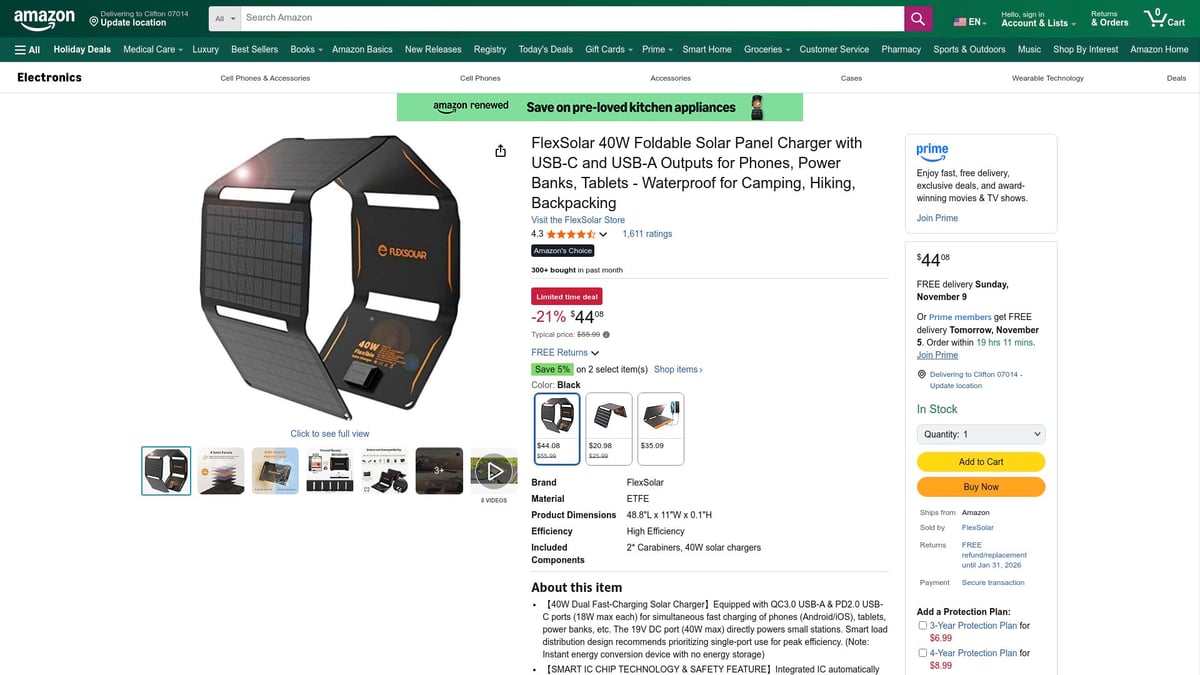
This solar phone charger features a foldable, waterproof design, making it perfect for remote work, camping, or any situation where you need to charge phones, tablets, or even power banks quickly. The lack of a built-in battery means you must connect devices directly or use a separate power bank.
Pros:
- High power output for fast charging
- Foldable and portable
- Weather-resistant construction
Cons:
- No built-in battery, so solar phone charger requires sunlight for operation
- Not ideal for overnight charging
For those who value speed and adaptability, the FlexSolar is a versatile solar phone charger choice.
Power-Bank-Solar-Charger 42,800mAh Portable Charger, QC 3.0 Fast Charger
Offering a huge 42,800mAh battery, the Power-Bank-Solar-Charger is one of the most affordable high-capacity options, at around $25.49. Its QC 3.0 fast charging and built-in super-bright flashlight make it an excellent solar phone charger for emergencies and long journeys.
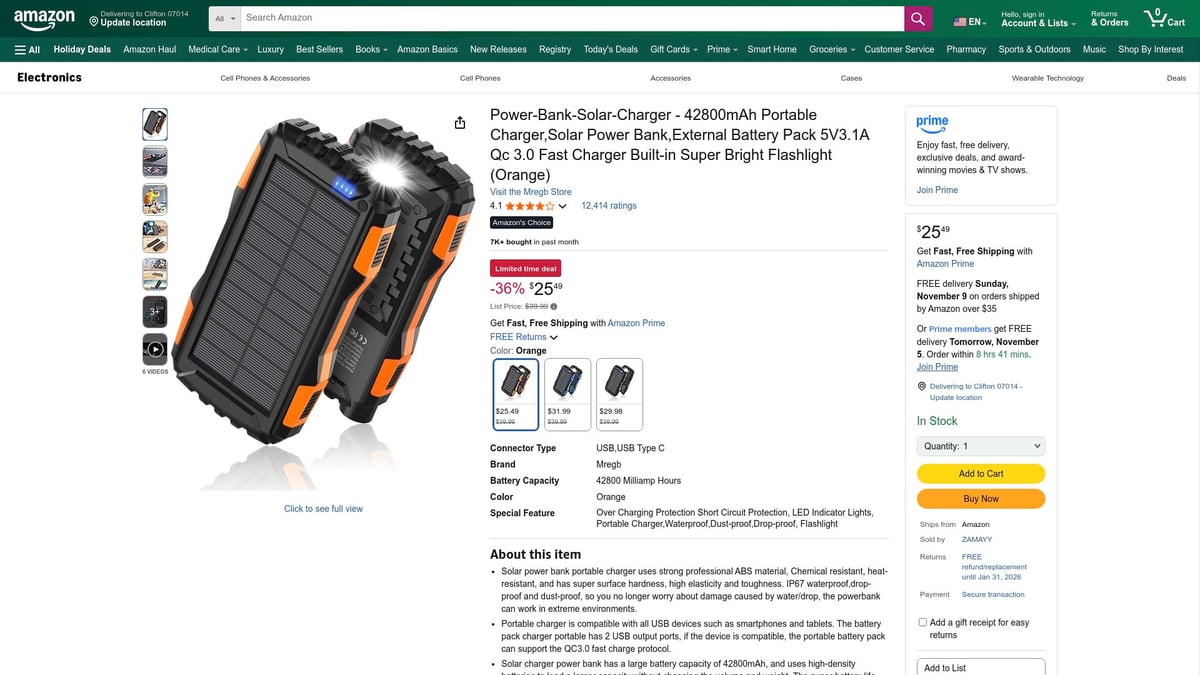
This solar phone charger is designed for emergency preppers, long-distance travellers, and outdoor adventurers who need reliable power in remote locations. The single solar panel means slower recharge times, but the battery can support several device charges before needing more sunlight.
Pros:
- Exceptional battery life
- Affordable price for the capacity
- Integrated flashlight for emergencies
Cons:
- Slower solar recharge due to single panel
- Bulkier than standard chargers
If reliability and affordability are crucial, this solar phone charger ticks all the boxes for extended trips.
BigBlue 28W Solar Charger, 3 USB Ports, Foldable, IP44 Waterproof
The BigBlue 28W Solar Charger delivers efficiency and versatility for tech-heavy families or groups. It is priced at about $72.99 and features three USB ports, a foldable design, and an IP44 waterproof rating.
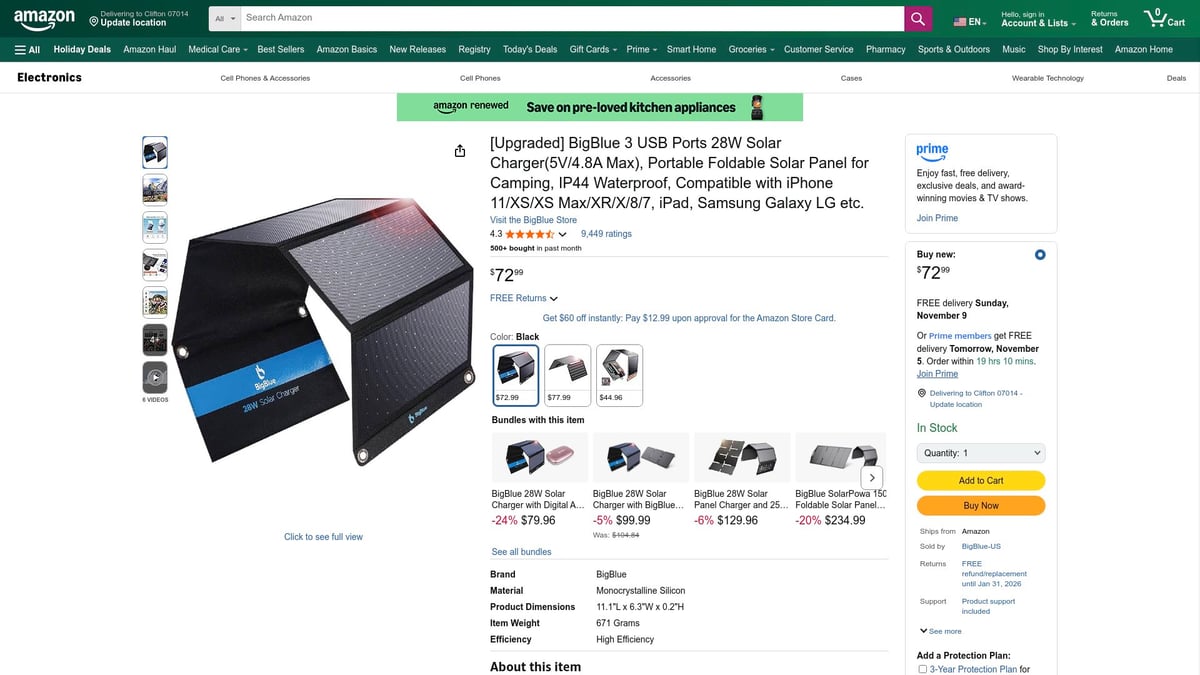
This solar phone charger allows simultaneous charging of multiple devices, making it a favourite among families or groups travelling together. The high-efficiency solar panels convert sunlight into usable power quickly, though it does not include a built-in battery.
Pros:
- Multiple device charging
- High efficiency and fast conversion
- Durable, water-resistant build
Cons:
- Higher price point compared to other solar phone charger models
- No built-in battery, requires direct sunlight
For those who need to charge several devices at once, the BigBlue is a premium solar phone charger option.
Uukto Power-Bank-Solar-Charger 45,800mAh Fast Charging with 3 Built-in Cables
The Uukto Power-Bank-Solar-Charger is a powerhouse, boasting a 45,800mAh capacity and fast charging. Priced at around $29.99, it includes three built-in cables and an LED flashlight, maximising convenience for heavy device users.
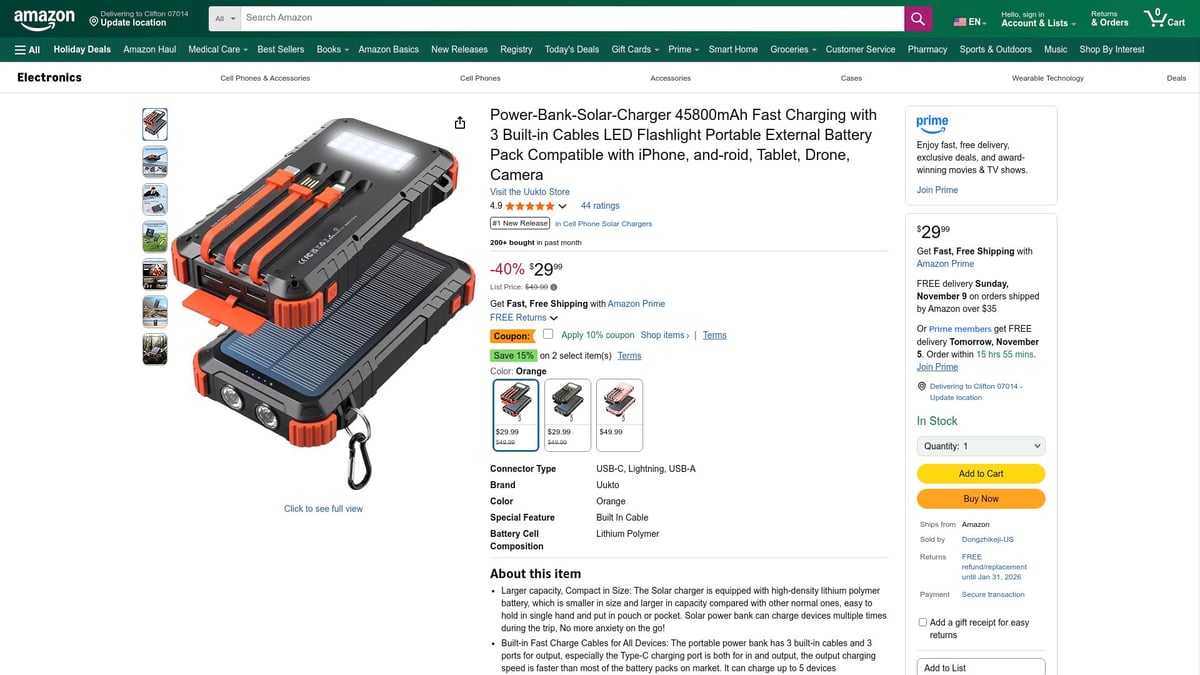
This solar phone charger is designed for frequent travellers, tech enthusiasts, and anyone who needs to power multiple devices on the go. The built-in cables reduce the need to carry extras, while the large capacity ensures several full charges.
Pros:
- Largest battery capacity among top picks
- Three built-in charging cables
- Fast charging speeds
Cons:
- Heavier than the average solar phone charger
- Slower solar charging due to single panel
If you need a solar phone charger with top-tier capacity and convenience, the Uukto is a leading choice.
Solar Charger, Power Bank, 42,800mAh Portable Charger with QC 3.0 Fast Charging
This Solar Charger Power Bank delivers a 42,800mAh battery, QC 3.0 fast charging, and a built-in super-bright flashlight, all for about $25.99. It is crafted for outdoor explorers, emergency kits, and remote workers needing dependable power.
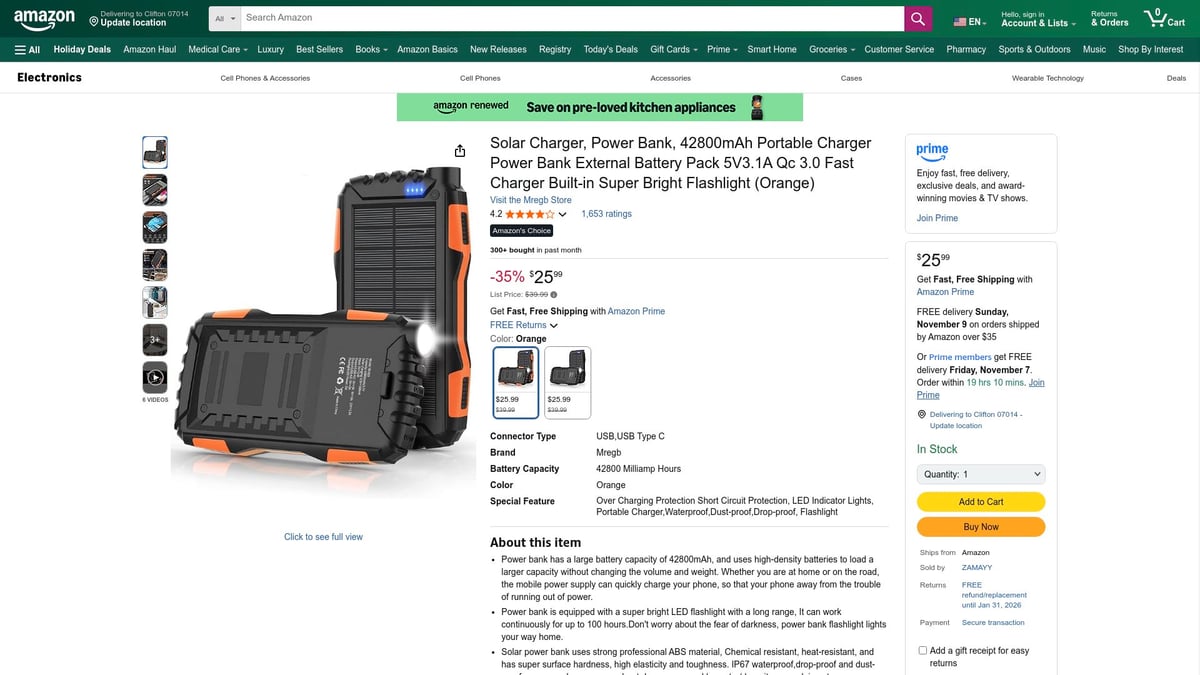
The high capacity ensures extended use, while the integrated flashlight adds a safety element for night-time or emergency scenarios. Although it is bulkier than some, this solar phone charger remains affordable and practical.
Pros:
- High battery capacity
- Affordable price
- Integrated flashlight for emergencies
Cons:
- Bulkier compared to slim solar phone charger models
- Slower solar charging versus multi-panel designs
For those who prioritise longevity and emergency preparedness, this solar phone charger is a smart addition to any kit.
Solar Phone Charger Maintenance & Usage Tips
Keeping your solar phone charger in optimal condition is essential for reliable performance during every adventure. Regular maintenance and smart usage practices help you get the most out of your device, whether you are hiking, camping, or preparing for emergencies. Here are expert tips to ensure your solar phone charger remains efficient, safe, and long-lasting.
Maximising Solar Charging Efficiency
To get the best results from your solar phone charger, always position the panels in direct sunlight. Shaded areas or indirect light can dramatically reduce charging speed and efficiency. Adjust the panel’s angle throughout the day to follow the sun’s movement, ensuring maximum exposure.
Regularly cleaning the panels is crucial. Dust, pollen, and smudges can block sunlight and decrease output. Use a soft, damp cloth to gently wipe surfaces. For those using their solar phone charger in dusty or sandy environments, check the panels after each use. These small habits help maintain peak charging performance on the go.
Safe Charging Practices
Using your solar phone charger safely is vital for protecting both your devices and the charger itself. Always use certified cables that match your phone model, and avoid plugging in too many devices at once to prevent overloading the ports. Monitor your devices while they are charging to spot any signs of overheating or malfunction.
If you are charging outdoors, consider pairing your phone with a rugged case. For example, iPhone Cases for Outdoor Use offer extra protection against drops and exposure, which is especially useful when using a solar phone charger in rugged environments. Following the manufacturer’s guidelines for battery safety ensures your equipment stays in top condition.
Storage and Care
Proper storage extends the life of your solar phone charger. When not in use, keep it in a cool, dry place out of direct sunlight and away from moisture. Avoid exposing the charger’s battery to extreme temperatures, as this can degrade performance over time.
Inspect cables and connectors regularly for signs of wear, fraying, or corrosion. Replace damaged parts immediately to prevent further issues. Taking these simple steps helps your solar phone charger remain reliable for years to come.
Troubleshooting Common Issues
If your solar phone charger is charging slowly, check that the panels are clean and receiving full sunlight. Device compatibility problems can often be resolved by using the recommended cables or updating your device’s software.
For issues like panel damage or noticeable battery degradation, refer to the manufacturer’s troubleshooting guide or seek expert advice. Many users share their experiences in product reviews, offering practical solutions for common challenges. Staying proactive with maintenance and addressing small problems early keeps your solar phone charger functioning when you need it most.
Frequently Asked Questions About Solar Phone Chargers
Solar phone chargers are becoming an essential accessory for anyone seeking reliable, eco-friendly power on the go. Below, we answer the most common questions to help you make informed decisions about your solar phone charger purchase.
How Long Does It Take to Charge a Phone with Solar?
Charging time with a solar phone charger depends on several factors. The most significant include sunlight intensity, the size and efficiency of the solar panels, and your device’s battery capacity.
On a bright, sunny day, a typical solar phone charger with a 10W to 20W panel can recharge a standard smartphone in about 2 to 4 hours. However, if clouds reduce sunlight or if the panel is smaller, charging may take longer, sometimes up to 8 hours.
For example, high-capacity models with multiple panels can charge faster, while compact chargers may need more time. Always check product specifications for average charging times, and remember that real-world conditions can vary.
Are Solar Chargers Safe for All Phones?
Most solar phone charger models are designed with universal compatibility in mind. They generally feature voltage regulation and short-circuit protection to ensure safe charging for major brands like Apple, Samsung, and Google.
It is important to use certified cables and follow manufacturer guidelines to protect your device. For Samsung users, pairing your solar phone charger with a sturdy Samsung Phone Cases Collection can add extra protection, especially when charging outdoors or in rugged environments.
Always monitor your device during charging and avoid overloading ports to maintain optimal safety. Modern chargers are built with multiple safety features, but user caution is still essential.
Can Solar Chargers Work in Cloudy Weather?
A solar phone charger can still function during cloudy or overcast weather, but its efficiency drops compared to direct sunlight. Most modern chargers are equipped with advanced panels that can convert even diffused light into usable energy, though charging will be slower.
If you live in a region with frequent cloud coverage, consider models with higher panel efficiency or multiple panels for better performance. For more details on how different solar cell types perform, refer to Thin-Film Solar Cell Efficiencies, which explains the technology behind solar phone charger panels.
User reviews often highlight that while some charging is possible in less-than-ideal conditions, it is best to plan for longer charging times when the sun is not shining brightly.
What’s the Lifespan of a Solar Phone Charger?
The average lifespan of a solar phone charger ranges from 2 to 5 years, depending on usage frequency, build quality, and care. High-quality models with robust materials and weather-resistant features tend to last longer.
Regular maintenance, such as cleaning the panels and storing the charger in a cool, dry place, can extend its life. Avoid exposing your solar phone charger to extreme temperatures or moisture for prolonged periods. Most reputable brands offer warranties, typically up to 12 months, which can provide extra peace of mind.
With proper care, your solar phone charger will remain a reliable companion for years of outdoor adventures and emergencies.
About the author : william yan